Aquablation: Surgical Robot Treats Enlarged Prostate - NBC4 Washington

Health
Popular posts from this blog
Lymph node metastasis in cancer progression: molecular mechanisms, clinical significance and therapeutic ...

stage 3 lung cancer spread to brain :: Article Creator Tracking Lung Cancer's Path It's common for lung cancer to metastasize, or spread. In fact, 57 percent of lung cancer patients are diagnosed when the cancer has already metastasized, according to an editorial in the Annals of Cancer Epidemiology. [1] Lung cancer also has a preferred path, traveling most often to the bones, brain, adrenal glands, and liver. [2] [3] Why Does Lung Cancer Spread So Easily? Lung cancer may metastasize readily because the lungs are a cellular traffic hub of the body. "The job of the airway is to deliver oxygen to all of your cells, so it's easy for cancer cells to get from the airway lining to the blood and spread to other organs," says Paul Bunn, MD, a professor of medical oncology at the University of Colorado School of Medicine in Aurora. Why Do Lung Cancer Cells Spread to Certain Organs? "Some organs produce a cellular si...
Free biotech stocks directory, pharma stocks, telemedicine stocks ...

stage 4 cervical cancer :: Article Creator Uterine Cancer Stages If you get a diagnosis of uterine cancer, your doctor may tell you what stage it is. It's a way to figure out how advanced your cancer is and what kind of treatment works best. Before your doctor decides your stage, they'll use tests, such as a biopsy and ultrasound, to find what type of uterine cancer you have. Also called the womb, the uterus is a pear-shaped organ where babies grow. There are two kinds of uterine cancer. Endometrial cancer, the most common form, begins in the inner lining of the uterus. Uterine sarcoma is a rare type that starts in the muscles in the uterus or the surrounding tissue. Doctors use two ways to decide the stage of uterine cancer. One is a method created by the International Federation of Gynecology and Obstetrics (FIGO). The other is the American Joint Committee of Cancer TNM staging system. The two methods are almost the same. Both sy...
Stage 4 Lung Cancer Life Expectancy
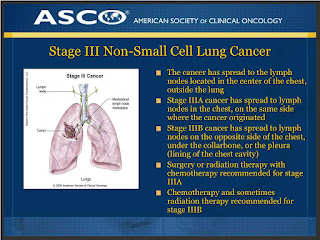
stage 3c lung cancer prognosis :: Article Creator Experimental Drugs Could Help Lung Cancer Treatment Research Enter A New Era More people with non-small cell lung cancer (NSCLC) are likely to benefit from new drugs that target molecular alterations in tumor cells, with less need for chemotherapy, following results of multiple clinical trials reported for the first time in late-breaking presentations at the ESMO Congress 2023. Better outcomes were achieved with combinations of experimental new drugs targeting common and rare tumor mutations than with standard treatments, with improvements seen in both early and late-stage NSCLC—the type of lung cancer responsible for approximately eight out of 10 cases of the disease. "The results are very impressive and mean that we can expect major changes in first-line treatment for patients with NSCLC with these targetable tumor cell alterations, and in the way we care for patients whose previous tr...