Lymph node metastasis in cancer progression: molecular mechanisms, clinical significance and therapeutic interventions


Woman, 41, Has Been Diagnosed With 7 Different Types Of Cancer: 'It Sucks But I'm Here'
In November 2023, Lainie Jones learned she had Stage 1 lung cancer and glioblastoma, an aggressive and potentially deadly type of brain tumor. For most people, being diagnosed with two different types of cancer would be devastating, but Jones always finds the positive.
"I feel very fortunate because throughout my cancer journey, I have literally found everything super early," Jones, 41, of Florida tells TODAY.Com. "(It's) why I'm so vocal about the importance of early detection." Jones has had seven different types of cancer because she has a rare genetic condition called Li-Fraumeni syndrome. People with Li-Fraumeni are more likely to develop cancer; the Li-Fraumeni Foundation estimates that 50% of the people with it will have cancer by age 40 and 90% will have cancer by 60.
Jones hopes her story increases awareness of the syndrome and the importance of early detection for cancer for everyone.
"It sucks that I've had seven cancers, but at the same time, too, what doesn't suck is I'm here," she says. "My purpose every single day is to make sure that someone not only knows my story, but somebody can reach out to me and say, 'How did you tackle this?'"
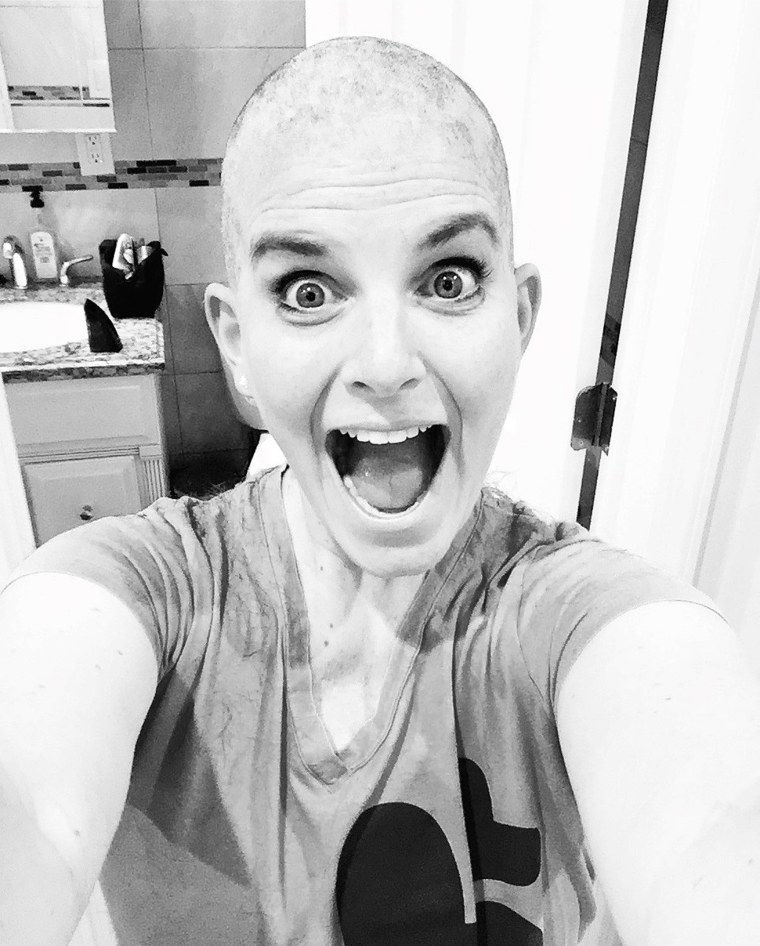 Over the years, Lainie Jones has had to shave her head as she's lost her hair due to cancer treatment. Photos of her shaving her head are even part of her wedding photographs.Courtesy Lainie Jones 'I already had cancer once. I could never get it again'
 When Jones was 18 months old, she was diagnosed with adrenal cortical carcinoma, an aggressive cancer of the adrenal glands.
"Obviously, it's something I don't remember having," she says. "My parents were super diligent."
At the time, in 1985, genetic testing for cancer wasn't widely used, so doctors didn't know that she had a genetic predisposition to developing cancer. (The National Library of Medicine notes that it wasn't until the mid-1990s that cancer genetic testing became available.)
"I always used to joke that I had cancer in 1985 as a baby. I used to say, 'Oh, check that off my list. I already had cancer once. I could never get it again,'" she says. "I literally always felt that."
But in 2008, Jones was studying to be a nurse when she felt a lump in her breast during a self-exam. She followed up with her doctor who gave her prescription for an ultrasound to get an image of the mass. But Jones delayed the appointment.
"I said to myself, 'I'm 24 years old. There's no chance I have breast cancer,'" she recalls. "I waited six months until December to go get that ultrasound."
Jones soon learned she had Stage 2 breast cancer and underwent a double mastectomy hoping that it wouldn't return. As soon as she finished breast cancer treatment, her mom's friend pointed out an unusual mole on Jones' back.
"She was like, 'I don't want to be too nosy, but that mole on your back looks very suspicious,'" Jones recalls. "We ended up having to take it off, and it ended up being melanoma."
At the time, Jones tried telling herself that three cancer diagnoses before 30 "could be a fluke." Then in 2010, in one of her follow-up PET scans for breast cancer, doctors found thyroid cancer, which had spread into her chest.
By that point, doctors believed that Jones likely had a genetic condition making her more likely to develop cancer.
"They actually sent me to MD Anderson Cancer Center, where they had me genetically tested," she says. "They said to me, 'Have you heard of this genetic predisposition called Li-Fraumeni syndrome?'"
 Having the support of her family, including husband Joseph Jones, helps Lainie Jones navigate diagnosis and treatment for seven different cancers.Courtesy Lainie Jones
 Jones recalled that she had asked her breast cancer doctor if she could have it, but he dismissed her. Learning she had Li-Fraumeni changed the type of surveillance she underwent.
"I was getting PET scans all the time. PET scans have a high dose of radiation," Jones explains. "With Li-Fraumeni syndrome, you have to limit your radiation exposure."
Instead, Jones undergoes MRIs, which do not have radiation. Most Li-Fraumeni patients undergo an annual whole-body MRI, bloodwork and other exams to aid in early detection, Dr. Robert Lufkin told TODAY.Com in 2024.
For many, learning they have a condition that makes them more likely to develop cancer would feel daunting. But Jones believes knowing she has Li Fraumeni is a blessing.
"Genetic testing saved my life because it really has shifted the way the doctors treat me and my protocols," she says. "I feel very fortunate."
Even though Jones had a double mastectomy after her breast cancer diagnosis, she had a recurrence of breast cancer in her lymph nodes in 2012. She started taking Herceptin, which "has really kept my breast cancer at bay," Jones says.
Jones' adrenal cancer also returned, and she's also been diagnosed with sarcoma, which begins in the connective tissues, such as bones and muscles. She undergoes breast ultrasounds as part of her routine screening, and that picked up her sarcoma in an early stage.
"Ultrasound has also been a really big game changer as well because for my thyroid cancer, they do head and neck ultrasounds," she says. "It's already come back twice. Most of my cancers have had recurrences but caught super early as well because of screenings."
Jones received her lung cancer and glioblastoma diagnoses in the same month, but because her lung cancer was found during routine screening and at an early stage, she only needed to undergo four rounds of radiation to treat it.
"It's really all about the early detection," she says. "Just because your cancer goes away, it's so important to stay on top of those screenings. … I always say, 'Once a cancer patient, always a cancer patient.'"
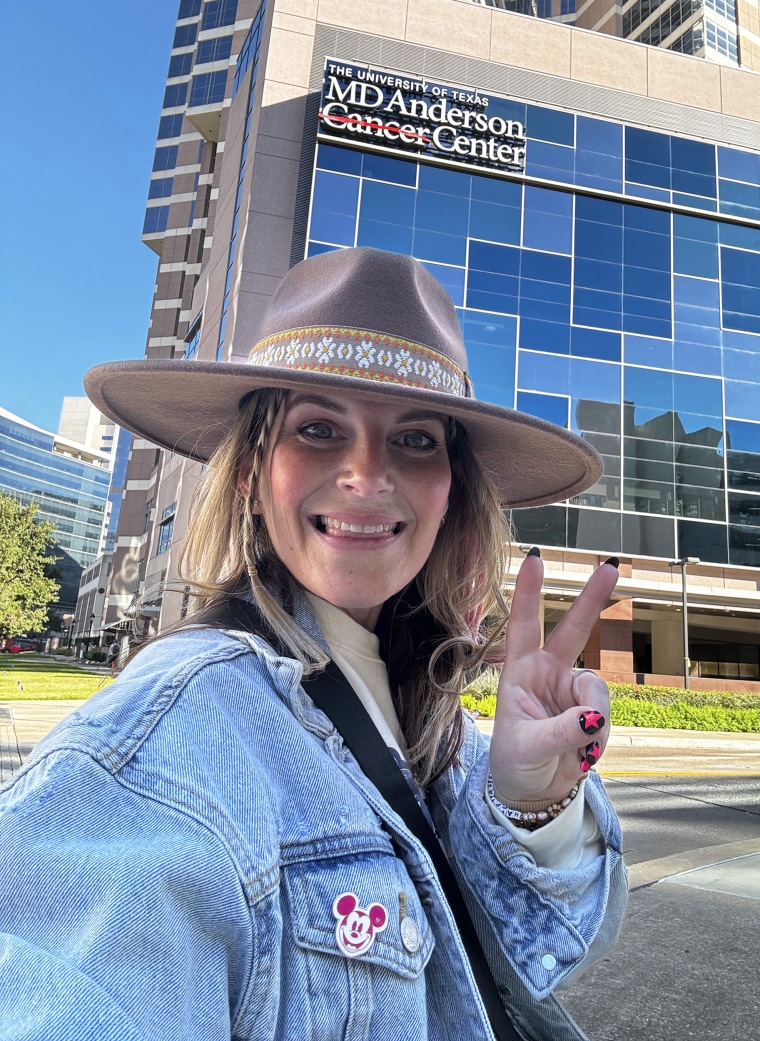 Lainie Jones travels from her home in Florida to Houston every three months to undergo scans at MD Anderson Cancer Center to check that a new cancer has not developed. Courtesy Lainie Jones
 Since her treatment for lung cancer, Jones has only been in active treatment for the glioblastoma. She underwent a craniotomy in November 2023, only weeks before her 40th birthday. A few weeks ago, she had a second craniotomy "due to some necrosis tissue they found with some cancer cells."
"I'm going to be starting another type of chemotherapy," she says. "I started chemotherapy for a year and then I also did 30 rounds of brain radiation as well."
The new chemotherapy she'll be taking is a pill, which she'll be on for six months. She'll continue to undergo regular MRIs, so if any cancer cells return, doctors can tweak her treatment plan immediately.
"This most recent recurrence came about in late December, so again we caught it super early, same thing with my first glioblastoma," she says. "All my doctors work together. … It's so comforting to know that everybody talks to each other."
Li-Fraumeni syndromeLi-Fraumeni syndrome is rare, impacting fewer than 50,000 people in the United States, says the Cleveland Clinic. About 1,000 families worldwide have the genetic mutation that can cause Li-Fraumeni sydnrome.
Li-Fraumeni syndrome is "an inherited predisposition to developing a wide rare of cancers, really due to a mutation or loss in a specific genet called P53," Lufkin, co-founder of the Li-Fraumeni Syndrome Association and oncologist at Compass Oncology in Portland, Oregon, told TODAY.Com. "That can lead to a multitude of cancers both at an early age or earlier than expected, as well as rare cancers."
Dr. Benjamin Smith, a breast radiology oncologist at MD Anderson Cancer Center in Houston and one of Jones' doctors, says the gene P53 "is often referred to as the guardian of the genome."
"(It) is very important in keeping our DNA and our genes healthy," Smith tells TODAY.Com. "People with a mutation in the P53 don't have the same ability ... To keep their DNA healthy and so their DNA is much more likely to accumulate genetic mutations, which ultimately can lead to the development of cancers."
In addition to experiencing multiple cancers throughout their lives, people with Li-Fraumeni syndrome "tend to have a shortened lifetime," Smith says.
While doctors can use traditional cancer treatments on people with Li-Fraumeni, they are more likely to develop secondary cancers from radiation.
"Because they don't have a good copy of P53 their normal, healthy cells are not as good at repairing the damage caused by therapeutic radiation," Smiths explains.
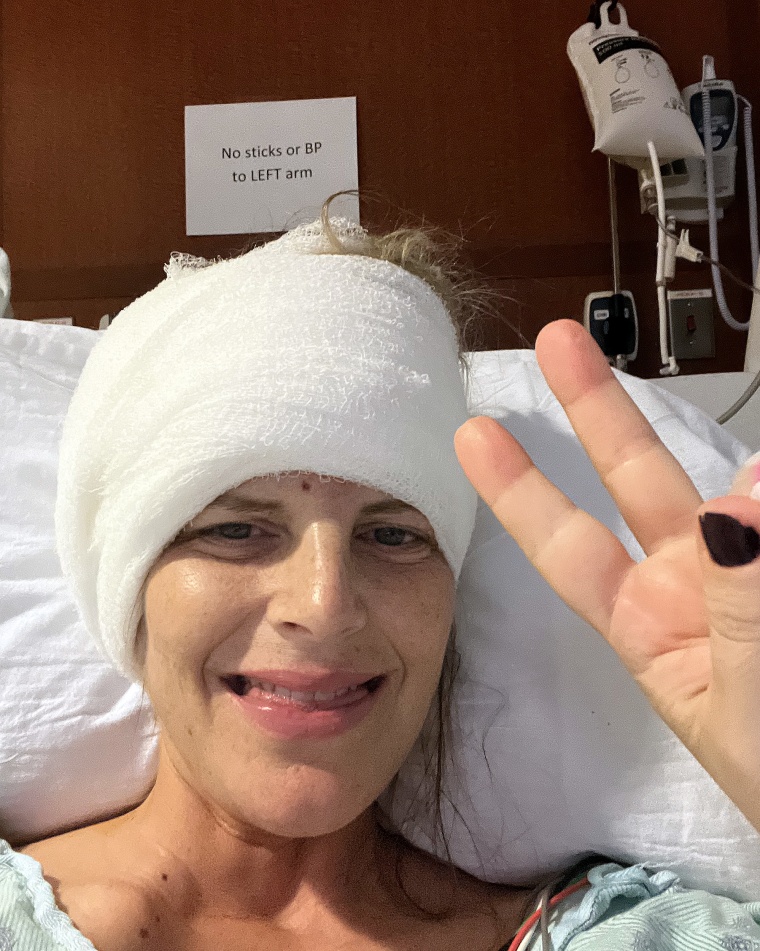 Lainie Jones experienced a seizure in November 2023 that led to her diagnosis of glioblastoma, a rare and aggressive brain tumor. She's still being treated for this cancer.Courtesy Lainie Jones
 Designing treatment plans for patients with Li-Fraumeni syndrome can be complex, as each patient needs therapies tailored to them. Despite how complicated Jones' health and treatment can be, her care team feels impressed by her.
"She's a special person," Smith says. "She's chosen to own the adversity that she's experienced in life and to grow from it and make it a part of her story as opposed to run from it. And that's really admirable. We can all learn from that."
'My purpose in life is to help others.'Being diagnosed with Li-Fraumeni and seven cancers has transformed Jones' life in unexpected ways.
"It's my purpose in life to help others and get through my journey," she says. "I want people to learn that, again, it's all about early detection. It really is. I can't stress that enough."
Jones also wants to "normalize" being open about one's family history of cancer.
"We need to have these conversations because it's going to help save lives," she says. "Cancer is one thing you don't want to ignore."
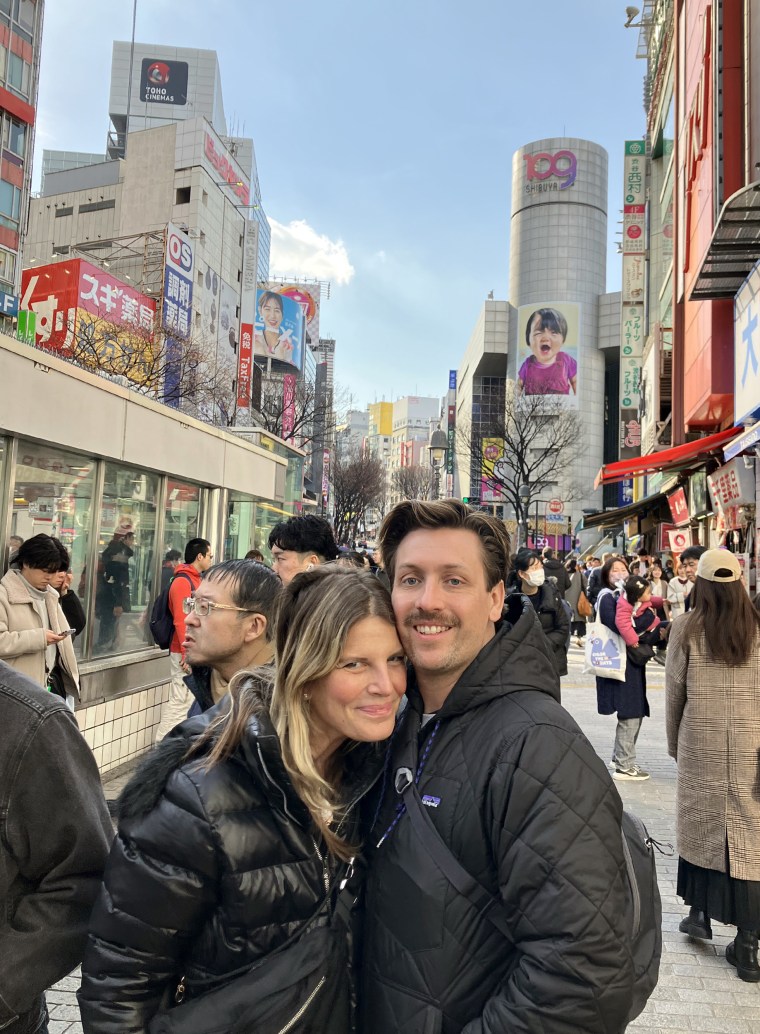 Lainie Jones loves to travel, and for her 40th birthday she visited Japan with her husband. It was the first time she traveled internationally, and she hopes her health remains stable so she can continue traveling. Courtesy Lainie Jones
 Despite the challenges she's faced, Jones feels grateful.
"Cancer sucks, but my life, I wouldn't want it any other way, as weird as it sounds. I just feel so lucky," Jones says. "Some people get a cancer diagnosis and only live a few weeks. Here I am. I'm living and thriving and making the most of every single day."
Symptom Burden Is High For Most Survivors Of Early-Stage Breast Cancer
Many survivors of early-stage breast cancer experience a high symptom burden, but often, their concerns don't get addressed or discussed during time-limited follow-up visits, according to the findings of a recent study in Annals of Surgical Oncology.
The increased use of Oncotype DX has led to a decline in the number of patients with early-stage, hormone receptor-positive breast cancer who receive chemotherapy, subsequently making data from existing studies on patients' symptom experience less useful. To address this growing gap in understanding, a team of researchers conducted a survey study to assess symptom burden in survivors of early-stage breast cancer who did not receive chemotherapy.
The survey assessed patient-reported outcomes (PROs) for 25 different symptoms related to distant recurrence, endocrine/hormonal therapy, local recurrence, body image, chest/arm pain, lymphedema, sexual health, mental health, endocrine therapy nonadherence, social support, and practical problems.
Symptoms were assessed and reported to meet a clinically significant threshold if they were rated as moderate to very severe, interfered with life quite a bit or very much, or otherwise met a prespecified clinically relevant threshold validated for a specific scale.
They recruited 130 patients, who had stage I-II, estrogen receptor-positive (ER+) or progesterone receptor-positive (PR+) and HER2− breast cancer, had not received chemotherapy, and were 6 months to 5 years postdiagnosis and cancer-free.
The final study population was 94 patients (average age, 61.3±11.5 years) who were 2.5±1.3 years from diagnosis. Also, 71.0% had undergone breast-conserving surgery and 87.2% were taking endocrine therapy at the time the study was conducted.
"
Use of PROs to assess symptoms and concerns in survivors diagnosed at an early stage allows for a comprehensive evaluation with identification of previously unrecognized needs.
Survey results showed that 6.4% of women did not experience any symptoms or concerns. However, 16.0% reported experiencing 1 to 2 symptoms or concerns, and 77.7% reported 3 or more symptoms or concerns. Restricting the concerns and symptoms to those that qualified as clinically significant, 13.8% of the women did not have symptoms or concerns, 37.2% reported experiencing 1 to 2, and 48.9% reported 3 or more.
Hot flashes, fatigue, back pain, joint pain, and headache were the most common threshold-level symptoms. Threshold-level, clinically significant symptoms reached a prevalence of more than 20%. Additionally, endocrine therapy nonadherence was prevalent (21.1%).
Time since diagnosis did not produce statistical differences in almost all symptoms, with the exception of hot flashes. More women who were 3 or more years from diagnosis reported hot flashes compared with those who were 6 months to 2 years from diagnosis.
Ultimately, 93.6% reported at least 1 symptom or concern, and 86% reported at least 1 symptom or concern that was clinically significant.
Despite its limitations (small sample size, relatively affluent and educated patients, patients enrolled from a single site), the researchers noted that their work demonstrated a high symptom burden in low-risk breast cancer survivors after treatment.
"Use of PROs to assess symptoms and concerns in survivors diagnosed at an early stage allows for a comprehensive evaluation with identification of previously unrecognized needs," the researchers stated. "This represents a clear opportunity to improve survivorship care by allowing both providers and survivors the data needed to prioritize topics for conversation and tailor survivorship care to their needs."
AI Tools Can Reduce Doctor Workload, Make Up For Lack Of Radiologists
Access DeniedYou don't have permission to access "http://indianexpress.Com/article/health-wellness/breast-cancer-ai-lancet-study-9833742/" on this server.
Reference #18.6e24c317.1739579120.1a12cab1
https://errors.Edgesuite.Net/18.6e24c317.1739579120.1a12cab1


Comments
Post a Comment