Blood Cancer Is a Broad Term. Here's What It Includes


Imfinzi Fails Lung Cancer Trial, But Scores In Bladder Cancer
AstraZeneca's hopes of positioning its PD-L1 inhibitor Imfinzi as a post-surgery therapy for people with earlier-stage lung cancer have taken a knock, although it performed well in a bladder cancer study.
Top-line results from the phase 3 ADJUVANT BR.31 study showed that giving Imfinzi (durvalumab) as adjuvant therapy for stage IB-IIIA non-small cell lung cancer (NSCLC) was no better than placebo at extending disease-free survival (DFS).
The trial enrolled patients with NSCLC that had PD-L1 expression on 25% or more cells whose tumours had been completely removed with surgery.
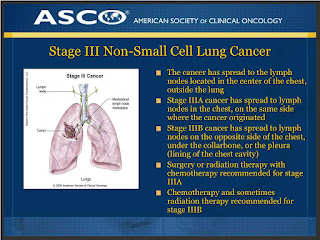
Imfinzi is already approved for unresectable, stage III NSCLC in patients whose disease has not progressed after chemoradiotherapy (CRT), based on the results of the PACIFIC trial, carving out a niche for itself away from the dominance of MSD's Keytruda (pembrolizumab) in metastatic disease.
AZ has struggled to extend the label of Imfinzi beyond that in NSCLC, other than a 2022 approval for the drug in combination with its CTLA4 inhibitor Imjudo (tremelimumab) for patients with metastatic (stage IV) disease. Last year, for example, the results of the PACIFIC-2 study were unable to show that adding the drug to CRT improved on CRT alone in unresectable, stage III NSCLC.
Sales momentum for the drug is still good, however, fuelled by a lengthening list of indications in other cancers, including most recently primary advanced or recurrent endometrial cancer that is mismatch repair deficient (dMMR). In the first quarter of this year, Imfinzi grew more than 50% to $900 million.
"We are disappointed in the ADJUVANT BR.31 results," said AZ's head of oncology R&D, Susan Galbraith.
"Imfinzi has helped change the treatment landscape and achieved multiple positive phase 3 trials for patients with earlier stages of lung cancer," she added. "We are committed to addressing the remaining unmet need in lung cancer through our broad development programme."
AZ is running several other studies in the hope of extending the labelling for the PD-L1 inhibitor in NSCLC, including medically inoperable or unresected stage I-II NSCLC in PACIFIC-4 and unresectable, stage III NSCLC in PACIFIC-5, -8, and -9.
There are plenty of options already available for perioperative treatment of early-stage NSCLC. Keytruda is already approved for adjuvant treatment after resection and platinum-based chemotherapy for stage IB-IIIA NSCLC, as is Roche's Tecentriq (atezolizumab), with a similar indication, but in tumours that express PD-L1 in 1% of cells or more.
MSD, meanwhile, also has a green light for Keytruda as perioperative therapy for patients with stage II, IIIA, or IIIB NSCLC tumours that are 4 cm or larger or affecting lymph nodes, and treatable with surgical resection, while Bristol-Myers Squibb has the green light for pre-surgical use of Opdivo (nivolumab) and recently filed for approval as a perioperative option in resectable stage IIA to IIIB NSCLC cases.
Bladder cancer hopes back on track
There was better news for Imfinzi this week in the NIAGARA study, which gives AZ a chance to return to the bladder cancer category with the drug three years after pulling out.
NIAGARA compared Imfinzi plus chemo to chemo alone in muscle-invasive bladder cancer (MIBC) patients scheduled for a cystectomy to remove the bladder. According to the top-line results, there was a statistically significant improvement in event-free survival (EFS) and overall survival (OS) with AZ's drug, with no impact on the ability to complete the surgery and manageable side effects.
The company said it plans to file the data with regulators, stating it has the potential to "transform the standard of care" for patients with MIBC. Imfinzi claimed an accelerated approval from the FDA in 2017 for advanced-stage bladder cancer, but that was withdrawn in 2021 after it failed a confirmatory trial.
Imfinzi is being tested across early- and late-stage bladder cancer in various treatment combinations, including in non-muscle invasive disease in the POTOMAC study, MIBC patients who are cisplatin-ineligible or refusing cisplatin in VOLGA, and locally advanced or metastatic disease in NILE.
EU Approves Endometrial, Lung Cancer Drugs From GSK And J&J
News

EmDee
GSK and Johnson & Johnson have picked up new approvals from the European Commission for new indications that are poised to unlock sales growth for key cancer medicines.
First up GSK, which got a green light for its PF-1 inhibitor Jemperli (dostarlimab) in combination with chemotherapy as a first-line treatment for all adult patients with primary advanced or recurrent endometrial cancer, a key part of the company's growth ambitions for the drug.
The expanded approval is based on the RUBY Part 1 trial, which showed that Jemperli (dostarlimab) given with carboplatin and paclitaxel chemotherapy achieved a 31% reduction in the risk of death compared to chemo alone after two and a half years, with median overall survival (OS) of 44.6 months and 28.2 months, respectively.
Crucially, the new label includes mismatch repair proficient (MMRp)/microsatellite stable (MSS) tumours, which account for 75% of all endometrial cancer cases. Jemperli has been approved in the EU with a restricted label that limited its use to patients with mismatch repair deficient (dMMR) or microsatellite instability-high (MSI-H) tumours since 2023.
Jemperli is only the second drug in the PD-1/PD-L1 inhibitor class with this indication in the EU after MSD's Keytruda (pembrolizumab), which was approved based on progression-free survival only – and the indication is viewed as being critical to GSK's ambition to build the drug into a $1 billion-plus blockbuster.
Meanwhile, J&J has claimed EU approval for its combination of EGFRxMET bispecific antibody Rybrevant (amivantamab) with third-generation EGFR tyrosine kinase inhibitor Lazcluze (lazertinib) as a first-line treatment for locally advanced and metastatic NSCLC with exon 19 deletions or exon 21 L858R substitutions.
The approval is supported by results from the MARIPOSA study, which showed that the chemotherapy-free regimen reduced the risk of disease progression or death by 30% compared to monotherapy with AstraZeneca's Tagrisso (osimertinib), which currently dominates the EGFR inhibitor market.
J&J reported top-line data showing that OS was also improved compared to Tagrisso earlier tis month and, while that data hasn't been presented yet, the company has suggested it looks likely to exceed one year.
The company reckons that Rybrevant/Lazcluze represents a major step forward in treatment for this type of lung cancer, and will be pivotal in growing Rybrevant into a $5 billion a year product along with its recent approval in combination with chemotherapy as a frontline regimen for NSCLC patients with less frequent EGFR exon 20 mutations based on the PAPILLON trial.
Main image: EmDee, CC BY-SA 4.0, via Wikimedia Commons
Immunotherapy Research May Give Hope To Some Cancer Patients
A new, small cancer study may give hope to patients with solid tumors in the stomach, esophagus or rectum.
The standard surgery includes removing portions of the body where the cancer occurred.
The study, conducted at Memorial Sloan Kettering Cancer Center, looked at a group of 103 patients, The New York Times reported.
They were given an immunotherapy drug that overrides how the body allows the immune system to block cancer treatments. No other drugs, except for the immunotherapy treatment, dostarlimab, were given. Basically, it allows the immune system to recognize cancer cells and attack them, NBC News reported.
Forty-nine patients who had rectal cancer, the tumors went away, and in the past five years, the cancer did not come back.
A majority of the other patients who had stomach, esophagus, liver, endometrium, urinary tract and prostate cancer also did not have a recurrence.
Of the 103 patients, only five had cancer return. Three of those had extra immunotherapy doses, while a fourth had cancer appear in a lymph node and had it removed. All four had no recurrence of cancer. The fifth patient's tumor shrank after they were given extra immunotherapy, the Times reported.
Maureen Sideris was one of the patients who were treated with immunotherapy for gastroesophageal cancer. She had a tumor that blocked part of her esophagus, and would have required the removal of part of her esophagus and stomach, followed by chemotherapy and radiation, a treatment she said, "would have been horrendous."
But she had immunotherapy treatment two years ago and is considered in remission, NBC News reported.
While they have hope that it could be a key in fighting cancer, it won't work for everyone. They must have a cancer that has a mismatch repair deficiency, where a mutation doesn't allow DNA to fix a problem when cells replicate, leading to more mutations.
The mismatch repair deficiency happens more frequently than in others. Only about 16% of ovarian cancer has it, while as much as 30% of endometrial cancer has the mutation, NBC News reported.
Cleveland Clinic gastrointestinal medical oncologist Dr. Suneel Kamath said very few cancers have the mutation, only "1%-2% of cancers at most," she said, adding, "Unfortunately, this is not going to be something that is a cure-all."
Weill Cornell Medicine surgical oncologist Dr. Heather Yeo said the treatment may be something to consider eventually.
"Immune therapies have a ton of potential. This shows we might be able to start with that," Yeo said.
The drug, if it were used to battle cancer, may be out of reach for some, however. It costs about $11,000 a dose and nine infusions over six months need to be given. For insurance to cover it, the medical needs to be part of the clinical guidelines. It is already approved for uterine cancers with mismatch repair mutations and for the treatment of rectal cancer, but it is not yet approved for other cancers.
If someone is included in the clinical trial, the drug is given for free, the Times reported.
There are also potential side effects such as fatigue, rash, itching and in some cases lung infections and encephalitis.
The study was published in The New England Journal of Medicine and was presented at the American Association for Cancer Research meeting in Chicago on April 27.
©2025 Cox Media Group


Comments
Post a Comment