Saw Palmetto: Benefits, Dosage and Side Effects - Livestrong
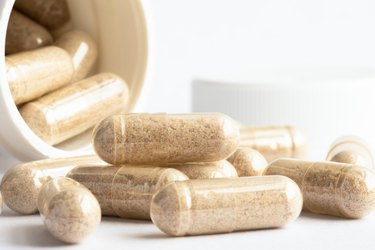
We still need more research to fully understand the health benefits of saw palmetto.
Image Credit: Michelle Lee Photography/iStock/GettyImages
Saw palmetto, or the American dwarf palm, is a type of palm tree native to the West Indies that now grows in the southeast U.S. As a supplement, it's best known as a natural treatment for benign prostatic hyperplasia (BPH), or an enlarged prostate.
Here, we'll dig into the research around saw palmetto for things like prostate health, polycystic ovary syndrome and hair growth, along with what you should know about dosage and side effects.
What Are Saw Palmetto Supplements?
Saw palmetto supplements are made from the trademark purple-black berries on the saw palmetto tree. The fruit extracts specifically contain the components that are used to treat BPH.
A January 2019 paper in the Biomedical Journal of Scientific & Technical Research notes that palmetto was withdrawn from the U.S. as a medicine in 1950 due to a lack of research. Since then, it has regained some popularity after a few studies have found it may be helpful in treating symptoms of BPH.
So how does saw palmetto work? The berries of the palmetto tree are packed with more than 100 different molecules linked to health benefits, including compounds known as fatty acids, long-chain alcohols and sterols. According to BMC Urology, the berries' phytosterols and fatty acids are most likely responsible for its positive health benefits.
It's also thought that saw palmetto works through mechanisms like relaxing smooth muscle, affecting insulin levels and having an anti-inflammatory effect.
Saw Palmetto for Prostate Health
Saw palmetto is most commonly used as a supplement for prostate health, specifically to help reduce the size of the prostate in cases where it's enlarged. In fact, according to the University of Michigan, saw palmetto is still used in Europe as a treatment for BPH.
The current research for using saw palmetto for the prostate is promising. For instance, a 2020 double-blind, placebo-controlled, randomized comparative study in BMC Urology found that a supplement of 500 mg of β-sitosterol-enriched saw palmetto oil (each tablet had 200 mg of the actual saw palmetto supplement) was effective in reducing some of the symptoms of an enlarged prostate.
The study found that participants who took the saw palmetto supplement could void more effectively than before treatment.
"Some patients do get some relief from saw palmetto with BPH," says Harland Holman, MD, a family medicine physician with Spectrum Health.
However, another double-blind, placebo-controlled, randomized clinical trial in The New England Journal of Medicine that looked at how saw palmetto affected those with moderate to severe BPH found that it didn't help with urinary obstruction.
The most important thing you can do if you're considering trying saw palmetto for your prostate health is to visit a physician first, Dr. Holman says. That way, you can rule out any other causes for your symptoms.
"I would recommend getting evaluated by a physician before starting, to make sure that urinary symptoms are from BPH and not a bladder infection or prostate cancer," he tells LIVESTRONG.com
Saw Palmetto and Testosterone
Along with reducing inflammation around the prostate, the specific way that saw palmetto can help with BPH is through impacting testosterone levels. It helps block testosterone from breaking down into dihydrotestosterone, which increases prostate size, says Patrick Fratellone, MD, an integrative physician, cardiologist and herbalist, adjunct professor of naturopathic medicine at the University of Bridgeport and vice president of the American Apitherapy Society.
For example, the BMC Urology study showed that the saw palmetto oil helped stabilize testosterone levels. Another August 2014 study in the Journal of the International Society of Sports Nutrition found that men taking a supplement that contained saw palmetto were able to increase their testosterone levels.
Saw palmetto may help increase libido, especially in people who have had sexual dysfunction because of an enlarged prostate. The primary way saw palmetto seems to help with libido is by helping decrease the size of the enlarged prostate, which then helps remove the sexual barriers in the first place. (Enlarged prostate might interfere with the ability to get or maintain an erection, for instance.)
A February 2013 clinical trial in Phytotherapy Research found that saw palmetto helped both decrease symptoms of BPH and the sexual dysfunction that can go alongside having an enlarged prostate.
An increase in libido may also result from improving testosterone levels in the body for those assigned male at birth. Dr. Fratellone adds that he has seen incidences of increased sperm count and sexual potency with saw palmetto supplementation.
According to the International Journal of Endocrinology Medicine, saw palmetto is considered to be a potential anti-androgen, or something that can decrease sex hormones in the body.
People with polycystic ovary syndrome (PCOS) usually have imbalanced sex hormones, including higher testosterone levels, and saw palmetto may be able to help balance those levels.
Lowering the levels of androgen hormones in the body could help decrease certain symptoms of PCOS, such as female facial hair or excess hair growth on the body. However, the research isn't conclusive enough to say whether saw palmetto is effective for PCOS.
Hair Growth
According to the January 2019 Biomedical Journal of Scientific & Technical Research paper, saw palmetto may be able to help with hair growth in cases where hair loss is caused by androgenetic alopecia, which is a type of hair loss caused by imbalanced sex hormones.
However, if the hair loss is from a different cause, saw palmetto oil may not be effective in helping with hair growth.
The exact effect that saw palmetto has on estrogen isn't clearly known. However, a June 2018 study in the African Journal of Urology found that estrogen plays a role in BPH. So, part of the way that saw palmetto affects BPH may be due to its role in regulating estrogen levels.
But overall, much more research needs to be done to understand the exact effect, if any, that saw palmetto has on estrogen in the body.
There is no single dosage of saw palmetto that doctors recommend, but the dosages used in clinical trials have been either 160 mg twice a day or 200 mg daily.
Keep in mind that many over-the-counter saw palmetto supplements come in dosages of 450 to 500 milligrams.
Side Effects and Interactions
Saw palmetto is generally safe for most people, Dr. Fratellone says, and Dr. Holman adds that there are no major known side effects from its use.
However, while it's considered a very safe supplement, saw palmetto can interact with certain anti-platelet drugs and anticoagulants such as aspirin or warfarin. Saw palmetto can also increase the side effects of NSAIDs, including liver damage. Pregnant and breastfeeding people should not use saw palmetto.
The Biomedical Journal of Scientific & Technical Research paper lists the rare side effects of saw palmetto as:
- Headaches
- Dizziness
- Nausea
- Vomiting
- Constipation
- Diarrhea
It's also important to note that while saw palmetto might help with some symptoms of an enlarged prostate, if your prostate is enlarged because of prostate cancer, saw palmetto won't help.
The supplement is only potentially helpful in cases of BPH, which is benign prostate enlargement, meaning it's noncancerous. And still, you should talk to your doctor before trying it.



Comments
Post a Comment